5.00 out of 45 votes
How to Save Money on Groceries: 20 Practical Tips That Actually Work
Grocery prices are up 40% since 2020, but you can spend less without clipping every coupon. This guide covers 20 proven ways to save money on groceries, from quick wins you can set up today to stacking multiple discounts for maximum savings.
Our team regularly tests the deals and methods mentioned in this article.
Cutting your grocery bill doesn’t start at the checkout. Most people try to save money on groceries by hunting for deals in the store, but by the time you’re standing in the aisle squinting at prices, half the battle is already lost.
The shoppers who consistently spend less aren’t more frugal. They’re more organized. And the good news is that the strategies that work don’t require hours of coupon clipping, a spreadsheet habit, or switching to a diet of lentils.
Since 2020, weekly grocery costs have climbed roughly 40% for the average household, from around $120 to $170 a week. Food prices rose another 3.1% in 2025 and are projected to keep climbing in 2026. So the stakes for having a strategy are higher than they’ve been in a long time.
This guide covers 20 practical ways to cut your grocery bill, organized from the quickest wins you can set up today to the bigger strategies that compound over time.
Why Most Grocery Saving Advice Doesn’t Work
Here’s the thing: most guides tell you to “make a list” and “buy generic.” That’s not wrong. But it skips the more important question, which is how you build a system that actually sticks.
The USDA’s moderate food plan puts monthly grocery spending for a family of four at $1,376 as of January 2026. The thrifty version is around $950. The gap between those two numbers, roughly $400 a month, is savings that’s available to anyone willing to be deliberate about how they shop.
We’re going to cover exactly how to close that gap.
💡
Tip: The USDA thrifty food plan ($950/month for a family of four) vs. the moderate plan ($1,376/month) leaves a $400/month gap. That gap is the savings opportunity this guide addresses.
Start Here: Quick Wins That Take Under 5 Minutes to Set Up
Before anything else, do these three things. They cost nothing, take almost no time, and start working immediately.
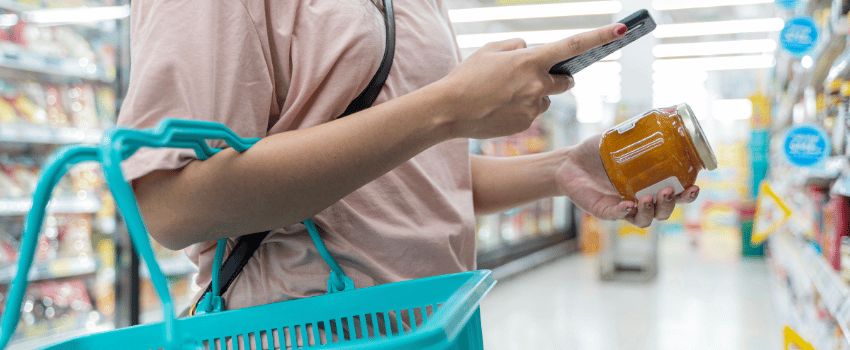
Sign up for your grocery store’s loyalty program. It’s free. Most stores have member-only prices that automatically apply at checkout, and households who use loyalty programs consistently save around $650 a year compared to those who don’t. If you’re not signed up, you’re paying the non-member price every single trip.
Download one cashback app. Just one, to start. Ibotta is the most popular choice for grocery cashback because it works at most major chains and lets you cash out at $20. Fetch Rewards is simpler: scan any receipt and earn points on anything. Pick whichever fits your stores.
Bookmark DontPayFull’s grocery-related coupon pages for the stores where you shop most. The Walmart coupons page and Target coupons page get updated weekly with current promotions. Takes 30 seconds to save the link.
These three moves alone can knock $50-$100 off your monthly bill without changing anything else about how you shop.
Build a Weekly Meal Plan Around the Sales Flyer
This is the single most effective thing you can do. Full stop.
Meal planning reduces total food costs by roughly 24% even without coupons. And shopping without a list costs approximately 20% more per trip because you’re making decisions in the aisle, where stores are designed to make you spend more.
The trick isn’t planning meals you want to eat this week. It’s planning meals around what’s on sale this week. Grab the store’s weekly circular (most stores have a digital version in their app) and build your dinners around whatever proteins and produce are discounted. When you buy the same ingredients on sale vs. regular price, the cost difference is 20-25% for identical items.
That’s before coupons. Before bulk buying. That’s just choosing to cook chicken when chicken is on sale instead of when you feel like it.
The other benefit most people don’t factor in: meal planning is the primary driver of less food waste. The average American family throws away between $1,500 and $2,913 worth of food every year. A weekly meal plan eliminates most of that because every ingredient has a planned use before you buy it.
Master the Grocery Savings Stack: How to Layer Multiple Discounts
Here’s what most grocery saving guides skip entirely. You don’t have to pick one savings method. You can stack several of them on the same purchase, and the combination is significantly more powerful than any single strategy.
Here’s how it works in practice. Pick a $5 item you buy regularly.
- Layer 1: Your store loyalty card brings it to $3.50 (member price)
- Layer 2: A digital coupon clipped in the store app takes off another $0.50
- Layer 3: An Ibotta offer you activated before shopping gives you $0.30 back
- Layer 4: Your grocery rewards credit card earns 6% cash back, knocking off another $0.17
That $5 item now costs you under $2.55. That’s a 49% reduction, and none of those steps required extreme couponing skills.
The order matters. Always activate your cashback app offers before you shop, not after. Ibotta and Fetch Rewards require you to activate deals in the app ahead of the purchase. Then pay with your rewards card as the final layer.
What most guides miss here is the credit card piece. The best grocery rewards cards earn 3-6% back on supermarket spending. Digital coupons already save the average consumer about $395.81 a year, and that’s without a cashback card layered on top. If you’re paying with a debit card at the grocery store, you’re leaving money in the register every single week.
💡
Tip: Stack loyalty card + digital coupon + cashback app + rewards credit card on the same item. A $5 item can drop to under $2.55 without any extreme couponing.
Use Digital Coupons and Cashback Apps the Smart Way
82% of grocery shoppers now use coupons, and 64% belong to at least one grocery loyalty program. So the competition for digital coupon savings is real, but so are the savings.
The main apps worth knowing:
Ibotta works best if you shop at specific chains. You browse available offers before your trip, activate the ones you’ll use, then submit your receipt or link your loyalty card. Cash out as PayPal, Venmo, or gift cards once you hit $20.
Fetch Rewards takes a different approach. You scan your receipt after any shopping trip and earn points, which convert to gift cards. There’s no activation step, which makes it easier for people who forget to plan ahead.
Checkout 51 runs weekly offers, with strong coverage of produce and pantry staples. Worth checking if your regular Ibotta offers are thin.
Flipp is the one to use before you shop. It aggregates the weekly flyers from every major grocery store in your area so you can compare prices side by side. It doesn’t give cashback itself, but it tells you which store has the better deal on whatever you need this week.
We track deals across dozens of stores, and one thing is always clear. Shoppers who stick to one app save more than those who jump between several and use them inconsistently. Pick your main app, link your loyalty card, and actually use it every week. The habit compounds faster than you’d expect.
Switch to Store Brands: The Easiest 20-40% Savings You’re Probably Ignoring
Name-brand loyalty is the most expensive habit most grocery shoppers have. Supermarkets place name brands at eye level because that’s where you’re most likely to grab them. Store brands sit on the top shelf and the bottom shelf, where they’re out of easy reach and out of easy view.
But switching to store brands can cut your cart by 20-40%. A real-world shopping test found a cart of 20 staple items cost $74 in store brands vs. $125 in name brands, that’s the same 40% gap.
The savings vary by category. Bread and cereals are where generics win by the largest margin, sometimes 44-71% cheaper. Dairy, condiments, canned goods, and baking ingredients are close behind. The places where brand quality actually differs tend to be things like coffee, snack foods, and products where you have a strong personal preference. Those are the exceptions. Flour is flour. Pasta is pasta.
One easy rule: if you’re cooking with it rather than eating it straight, buy generic.
Shop with a List and Never Shop Hungry
The data on list-less shopping is clear: it costs you about 20% more. It’s worth knowing why this happens, because it explains why just “being more careful” at the store doesn’t work.
Research from the Wharton School found that shoppers without a list switch into a reactive decision-making mode, responding to whatever’s in front of them rather than working from a plan. Hungry shoppers have this problem even worse because they’re optimizing for immediate satisfaction, not for what they actually need.
Practical fixes that work:
- Eat before you shop. Even a small snack makes a difference.
- Keep a running list on your phone throughout the week. Add things as you run out, not when you’re standing in the store trying to remember.
- Try curbside pickup for your main weekly shop. It eliminates the aisles entirely, which means you only buy what’s on your list. The trade-off is a pickup fee at some stores, but many chains offer it free with a loyalty account.
And here’s the mid-week trip trap: you go back for one thing, a gallon of milk or a bag of salad, and you walk out having spent $30-$40. If you really only need one staple, the corner store is cheaper than the risk of browsing a full grocery store.
Buy in Bulk Strategically (Not Everything Belongs at Costco)
Bulk buying saves 27% on average across 44 common grocery items compared to buying the same products in smaller quantities. But the key word is “strategically.”
The items worth buying in bulk are non-perishables you use constantly (rice, pasta, canned goods, oats, olive oil, coffee), proteins you can portion and freeze, and paper products and cleaning supplies. Costco and Sam’s Club are both solid for these categories. Memberships start around $60/year, which pays for itself in a couple of large shopping trips.
The items not worth buying in bulk: anything you’ve never tried before, produce you can’t freeze, anything with a short shelf life, and items that are only available in flavors or varieties your household won’t actually finish. Buying 48 yogurts because they’re cheap per unit isn’t savings if half of them expire.
The freeze-it rule is the unlock here. Proteins you find on sale in bulk can be portioned into freezer bags and used over several weeks. A 10-pound chicken breast deal is a bad idea if you’re planning to cook it all before it turns. It’s a great idea if you spend 10 minutes portioning it before it goes into the freezer.
Compare Prices and Choose the Right Stores
Not all grocery stores are priced the same, and the gap between a mainstream chain and a discount grocery can be 10-30% on identical products.
Aldi and Lidl consistently come in below major chains on most staple categories. WinCo, if you have one near you, is particularly good for bulk dry goods. International grocery stores, whether it’s H Mart, a Latin market, or a South Asian grocery, often have significantly lower prices on produce, dried legumes, rice, and specialty items than mainstream supermarkets.
The unit price is your primary tool for in-store comparisons. It’s listed on the shelf tag, usually as a small price-per-ounce or price-per-pound figure. The bigger container isn’t always cheaper per unit. Check before you assume.
For planning which store to visit, Flipp is useful for comparing weekly sale prices across stores in your area without driving to each one.
One place where mainstream chains are almost never worth the price is the non-food section. Cleaning supplies, toiletries, and paper products are almost always cheaper at Target or Walmart than at the grocery store. Buy those elsewhere.
Cut Food Waste to Stop Throwing Money Away
The average family of four throws away between $1,500 and nearly $3,000 worth of food every year. That’s not a savings opportunity you find on a shelf. It’s money you’re already spending and literally discarding.
The FIFO rule is the simplest habit fix: First In, First Out. When you get home from the store, move older items to the front of the fridge and pantry and put new items behind them. You’d be surprised how much waste comes from simply forgetting what’s already in there.
The stretch strategy is the other side of this. Build meals that use ingredients across multiple dishes. A roast chicken becomes cold chicken over salad, then chicken broth, then a soup. A bunch of cilantro bought for tacos also goes in the rice, the guacamole, and the scrambled eggs. When you think of ingredients as building blocks across several meals rather than belonging to one recipe, waste drops sharply.
Freeze things before they go bad, not after you’ve already left them in the fridge too long. Most proteins freeze well, as does bread, cooked grains, and a lot of vegetables.
Buy Seasonal Produce and Shop the Right Sales Calendar
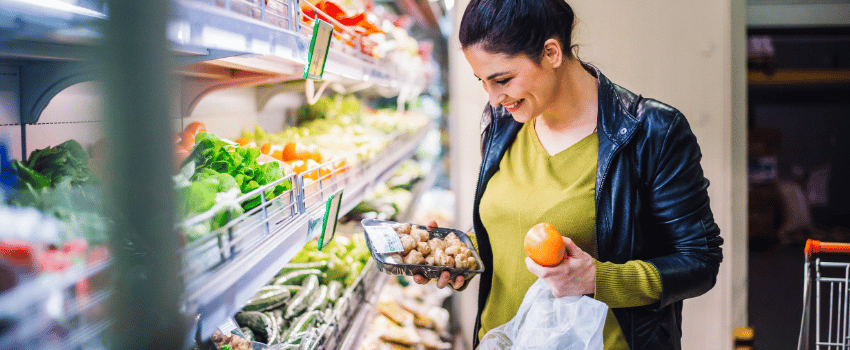
In-season produce can be 20-50% cheaper than out-of-season imports, and it tastes considerably better. The rough seasonal guide: berries in summer, stone fruit in summer, citrus in winter, squash and root vegetables in fall and winter.
Frozen vegetables are worth a look: they’re just as healthy as fresh, and usually a lot cheaper when the fresh stuff isn’t in season. If you’re sauteing spinach or roasting broccoli, the texture difference from frozen is minimal and the price difference is real.
On timing within the week: meat markdowns typically happen Thursday through Saturday at most major chains. Produce markdowns tend to happen Monday and Tuesday. If you’re flexible about when you shop, these patterns matter.
Certain weeks of the year also have predictable deep discounts on specific categories: Super Bowl week for chips, dips, and beverages; November and December for baking staples; summer for grilling meats and condiments. If you’re buying those things anyway, buying during those windows saves a meaningful amount. Our 2026 shopping sales calendar has the full schedule of deal windows by category.
More Ways to Trim Your Grocery Budget
A few more tactics that add up:
Skip the convenience tax. Pre-cut vegetables, pre-shredded cheese, pre-sliced fruit. You’re paying a 30-50% premium for a few minutes of prep work. Whole vegetables and block cheese cost less. Buy a box grater.
Swap proteins by cost. Chicken thighs are 40-60% cheaper than chicken breasts, more forgiving to cook, and arguably better. Eggs are the best value protein per gram you’ll find in any grocery store. Lentils and canned beans are even cheaper. None of these are compromises on nutrition.
Make a few staples yourself. Salad dressing, simple marinades, pasta sauce. The ingredient cost is pennies compared to $4-$7 store-bought versions. A basic vinaigrette is olive oil, an acid (lemon juice or vinegar), salt, and something for flavor. Two minutes of work, half the price of the cheapest store bottle.
Shop solo when you can. Shopping with kids or partners who add things to the cart tends to push the total significantly higher than your list. Not always avoidable, but worth knowing.
Frequently Asked Questions About Saving Money on Groceries
What is a realistic weekly grocery budget for a family of 4?
The USDA’s thrifty food plan puts it at around $950/month ($238/week) for a family of four as of early 2026. The moderate-cost plan is $1,376/month ($344/week). Where you land depends heavily on how much you cook from scratch, whether you use coupons and loyalty programs, and which stores you shop at. Families actively using meal planning and discount stacking can often stay closer to the thrifty end without feeling deprived.
Does meal planning actually save money?
Yes, and meaningfully so. Studies show that sticking to a meal plan can cut your total food bill by about 24%. It works for two reasons: you buy fewer unplanned items because you’re shopping from a list, and you waste less food because every ingredient has a planned use before you buy it. The savings compound when you build meals around weekly sale items rather than around what you feel like cooking.
Is buying in bulk always cheaper?
No, and this is a common misconception that ends up costing people money. Bulk buying saves 27% on average across non-perishable staples, but it only saves money if you use everything you buy before it expires. The real test: would you have bought this quantity anyway over the next 30-60 days? If yes, bulk is a good deal. If you’re buying it because it seems like a deal, you’re probably wasting money.
How much can coupons save you on groceries per month?
The average digital coupon user saves around $395.81 per year, about $33/month, from coupons alone. Stack that with a loyalty program and a grocery rewards credit card, and the combined savings can reach $75-$150/month for a household that shops actively. Heavy coupon users report saving significantly more, but they’re also putting in considerably more time each week.
What is the cheapest grocery store in the US?
Aldi is consistently ranked as one of the most affordable grocery chains nationally, with most studies finding it 10-20% cheaper than mainstream chains on comparable items. Lidl is similar where available. WinCo is extremely competitive on dry goods and bulk items. Warehouse clubs like Costco offer great per-unit pricing but require a membership fee and a willingness to buy in larger quantities.
How can I cut my grocery bill in half?
Half is an ambitious target, but it’s doable if you’re currently shopping without much of a plan. The combination of meal planning around sales (saves 20-25%), buying generic instead of name brand (saves 20-40% per item), using digital coupons and cashback apps, and a grocery rewards credit card can add up to 40-50% in total savings vs. shopping without any strategy. These methods compound. You don’t need all of them at once. Start with meal planning and one loyalty program, then add layers from there.
Sources
- Bureau of Labor Statistics – Consumer Price Index 2025 in Review: Food price inflation data for 2025, including food-at-home increase of 2.4% (2026)
- USDA Food Plans – January 2026 Cost of Food Report: USDA moderate food plan benchmarks by household size (2026)
- Brownfield Ag News – USDA Forecasts Food Prices to Rise 3% in 2026: Weekly grocery cost increase since 2020 (~40%) (2026)
- Swiftly Consumer Survey – Rising Trend in Coupon and Retail App Use: 82% coupon usage, 64% loyalty program participation (2025)
- LendingTree – Buying in Bulk Study: 27% average savings from bulk buying across 44 grocery items (2024)
- CNET – How Much Buying Store Brand Groceries Will Save You: Name-brand vs. store-brand cart comparison test showing 40% savings
- CNET – Meal Kits Survey 2025: $1,500 average annual food waste per household (2025)
- The Dinner Daily – Saving Money on Groceries: How I Saved $347 in One Month: 20% additional cost from shopping without a list; 20-25% price difference on sale vs. non-sale items (2025)
- Capital One Shopping – Coupon Statistics: Average digital coupon savings $395.81/year; 7% redemption rate vs. paper coupons (2025)
- Meal Thinker – Grocery Budget Research: Meal planning reduces total food costs by 24% (2026)
Do You Have Any Suggestions?
We're always looking for ways to enrich our content on DontPayFull.com. If you have a valuable resource or other suggestion that could enhance our existing content, we would love to hear from you.
Was this content helpful to you?
Related Articles