5.00 out of 1 votes
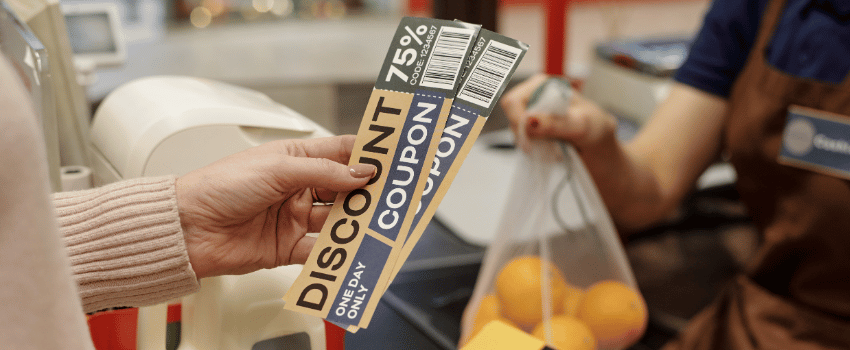
Stores That Let You Stack Coupons in 2026: The Complete List
Find out which major US stores allow coupon stacking in 2026, including CVS, Target, Kohl’s, and more. Includes store-by-store rules, policy updates, and tips for building a multi-layer stack.
Most coupon guides tell you to “stack your coupons” as if every store on earth works the same way. They don’t. Some stores let you combine a manufacturer coupon, a store coupon, and a loyalty offer on a single item. Others won’t accept more than one code per order. And a few have updated their policies in the past few months in ways most articles haven’t caught up with yet.
This guide covers which stores actually let you stack coupons in 2026, what the rules are at each one, and how to use DontPayFull alongside your favorite store apps to build the biggest possible discount. Our team tracks deals across thousands of stores and regularly tests coupon stacking scenarios, so the policies here reflect what’s actually working at checkout right now.
Key Takeaways
- ✓ Most stores allow 1 manufacturer coupon + 1 store coupon per item, but policies vary widely by retailer and format.
- ✓ Pharmacy chains (CVS, Walgreens, Rite Aid) and department stores (Target, Kohl’s) offer the most stacking layers, often 3-4 per item.
- ✓ Power stackers using 3+ discount layers frequently achieve 35%-50% savings per transaction, vs. 15.8% for single-coupon users.
- ✓ Walmart and Amazon are the most restrictive major retailers. Neither allows meaningful coupon stacking.
- ✓ As of early 2026, Target now allows stacking Circle deals with price-matched items, and Kroger expanded digital deal stacking to 5x per transaction.
What Is Coupon Stacking and How Does It Work?
Coupon stacking means combining multiple discounts on the same item or order. The basic version is a manufacturer coupon layered with a store coupon. The advanced version adds loyalty rewards and rebate apps on top of that.
Here’s how the layers work in practice:
- Layer 1: Manufacturer coupon. Issued by the brand itself (Procter & Gamble, Kellogg’s, etc.). These come from Sunday newspaper inserts, brand apps, and coupon sites. One manufacturer coupon per item per transaction is the industry-wide rule.
- Layer 2: Store coupon. Issued by the retailer (Target Circle offer, Walgreens store coupon, Kohl’s promo code). This stacks on top of the manufacturer coupon because it comes from a different source.
- Layer 3: Loyalty rewards / store currency. ExtraBucks at CVS, Kohl’s Cash, Target Circle Card discount. Some stores count these as a third layer; others require them to be used on separate transactions.
- Layer 4: Rebate apps. These activate after purchase, not at checkout. You buy the item, submit your receipt, and get cash back deposited later. This is technically a fourth layer and works at most stores regardless of what you did at checkout.
The key rule to memorize: one manufacturer coupon per item per transaction. No store will let you stack two manufacturer coupons on the same item. But there’s no similar universal rule for store coupons, loyalty offers, or rebate submissions.
The Complete List: Stores That Allow Coupon Stacking in 2026
Most major US retailers follow the one-manufacturer-plus-one-store-coupon-per-item baseline. The stores below all allow at least that level of stacking. Some go considerably further. Policies change, so it’s worth checking the store’s official coupon policy page before a big shopping trip.
Here’s a quick-reference summary before we get into the details:
| Store | Max Layers Per Item | Types Allowed | Online Stacking | Notes |
|---|---|---|---|---|
| CVS | 3+ | Mfr + Store + ExtraBucks | Yes | Rolling ExtraBucks strategy unlocks continuous savings |
| Walgreens | 3 | Mfr + Store + Cash rewards | Yes | Digital and paper cannot stack on same item |
| Rite Aid | 3 | Mfr + 2 types of store coupons | Yes | UPC prefix determines coupon type (48 vs 49) |
| Target | 3 | Mfr + Target + Circle offer | Yes | Circle Card adds 5% on all purchases; price match + stack allowed as of Jan 2026 |
| Kohl’s | 4 | Sitewide + dept + Kohl’s Cash + Rewards | Up to 4 codes | Only 1 sitewide discount per order |
| JCPenney | 3 | Pct-off + dollar-off + rewards | Yes | Different types stack; same types do not |
| Big Lots | 2 | Pct-off + dollar-off | Yes | Military discount also stackable with dollar-off |
| Kroger | 2 | Mfr + digital store coupon | Yes | Weekly Digital Deals usable up to 5x per transaction as of March 2026 |
| Safeway | 2 | Mfr + Just4U digital | Yes | No stacking on items already receiving store discount |
| Publix | 2 | Mfr + Publix coupon | Yes | BOGO items: one coupon per transaction |
| Dollar General | 2+ | Mfr + DG store coupon; multiple DG coupons per transaction | Yes | DG Digital Coupons counted as mfr coupons unless labeled DG Store Coupon |
| Family Dollar | 2 | Store + mfr | Limited | Smart coupons cannot be doubled or stacked |
| Gap/Old Navy/Banana Republic | 5 codes | Multiple code types | Up to 5 codes online | In-store stacking more limited |
| DSW | 3 | Codes + DSW Rewards | Up to 3 codes | Coupons one-time use per account |
| Victoria’s Secret | 3 | Multiple coupon types | Yes | Retroactive code addition by phone available |
| Joann | Multiple | Store coupons + competitor coupons | Yes | Accepts competitor coupons from Michaels, Hobby Lobby |
| Michaels | Multiple | Store coupons + competitor coupons | Yes | Accepts competitor coupons from Joann, Hobby Lobby |
| Home Depot | 2+ | Deal price + gift card + Pro Xtra | Yes | Gift card payment stacks with deal pricing |
| BJ’s Wholesale | 2 | Mfr + BJ’s coupon | Yes | Warehouse club; better stacking than Costco |
Pharmacy Chains: CVS, Walgreens, and Rite Aid
Pharmacy chains are the most stacking-friendly stores you’ll find. CVS runs the most layered system of any major US retailer. You can stack a manufacturer coupon, a CVS store coupon, and earn ExtraCare Bucks on the same transaction. ExtraBucks print out on your receipt after the transaction and act as store cash for your next visit. That means a single purchase can simultaneously use coupons AND generate savings you spend on the next shopping trip.
One CVS-specific quirk: BOGO 50% restrictions apply on some items, so a coupon won’t stack with the BOGO when it would result in a free item. But for standard-priced items, you’re looking at 3 active layers plus any rebate submission you file after checkout.
Walgreens runs a slightly different system. The rule is 1 manufacturer coupon plus 1 Walgreens store coupon per item, and you can also earn Walgreens Cash on promotional items in the same transaction. The catch: if a Walgreens store coupon exists both digitally in the app and as a paper coupon, you can only use one version on the same item. Digital and paper are not separate types here. But stacking a manufacturer coupon with the Walgreens digital coupon plus earning Walgreens Cash rewards? That’s all allowed in one transaction.
Rite Aid has the most technical stacking system of the three pharmacy chains. The store has two types of its own coupons, identified by UPC prefix. Coupons starting with 49 are Rite Aid Manufacturer coupons. Ones starting with 48 are Rite Aid Valuable coupons. Stack a regular manufacturer coupon with both, and you get up to 3 coupons per item. It’s obscure, but worth knowing.
Department and General Merchandise Stores: Target, Kohl’s, JCPenney
Target has one of the cleaner stacking policies among department stores: 1 manufacturer coupon, 1 Target store coupon, and 1 Circle offer per item. That’s three layers per item. On top of that, if you pay with a Target Circle Card, you get an automatic 5% back on all purchases. As of January 2026, Target now lets you stack Circle deals with price-matched items. That wasn’t possible before. There’s also a limit of 4 identical coupons per household per day, so plan ahead if you’re buying in bulk.
Kohl’s is one of the most coupon-friendly stores period. Online, you can use up to 4 promo codes per order. The layers break down like this: one sitewide percentage-off code, department or item-specific dollar-off codes, Kohl’s Cash from prior visits, and Rewards Cash from the loyalty program. Four layers. The one limit: only one sitewide code per order. Two 30%-off codes won’t work. But a 20% sitewide code on top of a $10 off shoes code plus $15 in Kohl’s Cash? That’s all fine.
JCPenney works on a type-based stacking logic: different types of discounts can stack, but same-type discounts cannot. So a percentage-off code and a dollar-off code stack fine. Rewards layered on top of either one also work. But two percentage-off codes? Not allowed. The practical tip for JCPenney is to save reward points until you have a large balance, then apply them on top of a promotional percentage-off event.
Big Lots takes a more permissive approach to percentage-off and dollar-off combinations. If you have both, they’ll stack. The store’s military discount is also stackable with dollar-off coupons, which is worth knowing for eligible shoppers.
💡
Tip: Target’s limit of 4 identical coupons per household per day matters most for grocery-type items. For clothing or housewares, you’ll rarely hit it anyway.
Grocery Chains: Kroger, Safeway, Publix
Grocery stores generally allow 1 manufacturer coupon plus 1 store digital coupon per item. Kroger expanded its digital stacking rules as of March 2026. Weekly Digital Deals can now apply up to 5 times per transaction. Big change if you shop Kroger and buy multiples of the same item.
Safeway’s Just4U digital coupon program operates on the same baseline: 1 manufacturer plus 1 store coupon per item. One restriction to note: if an item is already receiving a store discount (like a members-only sale price), you cannot stack a second store coupon on top of it. The sale price counts as one layer, and your manufacturer coupon is your second.
Publix follows the same 1-plus-1 structure. Digital coupons must be added through the Publix app before you shop; they won’t be applied retroactively. For BOGO items, you’re allowed one coupon per transaction (not per item). It’s a reasonable limitation, but worth knowing before you plan a big Publix haul with matching coupons for each BOGO pair.
A grocery-specific trick we’ve seen work consistently: check the weekly ad before loading coupons. If an item is on a store-markdown sale, your manufacturer coupon stacks on top of the already-discounted price. You’re not using extra layers, but you’re combining a lower starting price with a coupon, which often beats a higher-priced item with two coupons.
Dollar Stores: Dollar General and Family Dollar
Dollar General’s official coupon policy is worth bookmarking. The store allows 1 manufacturer coupon plus 1 DG store coupon per item. But there’s a nuance: multiple DG coupons in one transaction are fine, one per qualifying item, unless the coupon says otherwise. Overages apply to the remaining cart balance. Not cash back. And the limit is 5 identical coupons per household per day.
One thing to watch with DG Digital Coupons: they’re counted as manufacturer coupons in the system unless the coupon is specifically labeled a DG Store Coupon. This affects what you can stack on the same item, so read the coupon type before you plan a combination.
Family Dollar is more limited. The baseline rule is 1 store coupon plus 1 manufacturer coupon per item, but their Smart Coupons program explicitly excludes doubling and stacking. Don’t try to stack two Smart Coupons; the register won’t allow it.
Online and Apparel Stores: Gap, DSW, Victoria’s Secret, Newegg
Online stores tend to have more flexible multi-code checkout systems than physical stores, and a few brands in this category stand out.
Gap, Old Navy, and Banana Republic all allow up to 5 coupon codes per online order. The typical sequence is percentage-off first, then dollar-off, then free shipping code. Five codes is unusually generous by any standard. Note that in-store stacking at these brands is more limited than online.
DSW allows up to 3 coupon codes per online order, and their Rewards program stacks with promo codes. The main limitation: coupon codes are one-time use per account, so you can’t reuse a code you’ve already applied.
Victoria’s Secret allows up to 3 coupons per in-store purchase. There’s also a little-known option: call customer service after placing an order to add a code you forgot. More forgiving than most brands.
Newegg runs an interesting variation: the site technically allows unlimited codes, but only 1 promo code per item in the cart. The practical workaround is to build a cart with multiple different items, each redeemable under a different active code. Good for electronics shoppers who are buying multiple components.
Craft and Home Stores: Joann, Michaels, Home Depot
Joann and Michaels are the two craft stores with the most aggressive stacking policies. Both take multiple coupons with different barcodes in one transaction. Both also accept coupons from the competition: Joann takes Michaels coupons, Michaels takes Joann coupons, and both accept Hobby Lobby and Hancock. So if you have a Michaels coupon and a Joann coupon, you can use both at Joann.
One shared exclusion to know: the item getting 50% off gets excluded from the 25% off entire purchase coupon. You still get the 50%. The 25% just skips that item.
Home Depot allows stacking in a few ways: paying with a gift card on top of a promotional price counts as stacking, and Pro Xtra membership discounts can combine with some promotions. Manufacturer coupons at Home Depot are evaluated in a set order at checkout, so if you’re running multiple discounts, the register handles the sequence automatically.
Warehouse clubs are a mixed bag. BJ’s allows 1 manufacturer coupon plus 1 BJ’s coupon on a single item, making it a genuine stacking option for members. Costco generally doesn’t accept manufacturer coupons in-warehouse. On Costco.com some manufacturer coupons apply, but the overall stacking options are more limited than BJ’s.
🤔
Did You Know: Joann and Michaels are direct competitors that each accept the other’s printed coupons. Bringing a Michaels coupon to Joann (or vice versa) is a documented, store-sanctioned stacking move.
Stores That Do NOT Allow Coupon Stacking
Knowing where stacking doesn’t work saves you the frustration of a rejected code at checkout.
Walmart is more restrictive than most people assume. The store primarily accepts manufacturer coupons, not traditional store coupons, and its stacking rules tightened in 2025. A policy update restricted stacking two BOGO manufacturer coupons on the same two items, which was a common strategy shoppers used to get items close to free. Walmart’s general philosophy leans toward rollback pricing rather than coupon-friendly checkout mechanics. If you’re shopping at Walmart, your best bet is pairing a manufacturer coupon with a price rollback when both apply to the same item.
Amazon doesn’t allow multiple promo codes on most orders. Subscribe & Save discounts and coupon clippings can’t be combined. Lightning Deal pricing is exclusionary, meaning it can’t be stacked with other codes. Amazon’s checkout is built for one discount type per order. There are workarounds, like cashback credit cards or trade-in credits. But coupon stacking in the usual sense? Not here.
IKEA, Apple, and most direct-to-consumer brands use single-discount checkout. No coupon fields, or terms that explicitly block combining offers. When shoppers ask why stacking fails at these stores, the short answer is margin protection and fraud prevention. A store with a 40% margin can absorb one 10% code. Stack three codes on top of each other and the math doesn’t work anymore.
What to do instead at restricted stores: use a cashback credit card as your discount layer. A card that gives 2-5% back on all purchases applies automatically regardless of what the store allows at checkout. A rebate app is another option. These work in the background, submit receipts after the purchase, and don’t touch the checkout system at all.
How to Stack Coupons at Any Store: The DontPayFull Method
Stacking coupons works best when you approach it as a system, not a one-off search. Here’s the sequence we use:
Step 1: Find the store on DontPayFull.com. Look for both a percentage-off code and a dollar-off code. Some stores only take one type; others take both. Having both ready gives you the best shot at a multi-code checkout. Our DontPayFull extension can test codes at checkout automatically if you’d rather skip the manual search.
Step 2: Open the store’s app before you shop. Check for loyalty deals, Circle offers, or store-specific digital coupons on the same items you’re planning to buy. These are separate from promotional codes and often stack with them.
Step 3: Check rebate apps before putting items in your cart. Some rebate offers have quantity requirements or need to be activated before purchase. Activating before checkout takes 30 seconds and ensures the rebate applies after you buy.
Step 4: Apply codes in the right order at checkout. The standard sequence is: item-specific codes first, then sitewide percentage-off, then dollar-off, then shipping. Why does order matter? Some stores run the sitewide discount on the pre-code price. If you apply an item code first, you reduce the base price before the sitewide kicks in. Apply sitewide on the higher base price when you can.
Step 5: Pay with a cashback credit card. This is the layer that works everywhere, regardless of the store’s coupon policy. A 2-3% cashback card adds another layer that applies automatically to whatever post-discount total you’re paying.
What most guides miss is how often the same store has both a percentage-off and a dollar-off code active at the same time on DontPayFull. From processing thousands of coupon codes across hundreds of stores, we’ve seen that the stores with the most stacking-friendly checkout systems tend to also have the highest code variety. When a store allows two code fields at online checkout, merchants tend to issue more distinct code types. It’s not a coincidence; the stores that built multi-code infrastructure are the same stores that want shoppers coming back with deal incentives.
2026 Stacking Policy Updates to Know
A few significant stacking policy changes happened in late 2025 and early 2026. Most competitor guides written in 2023 or 2024 won’t reflect these.
Kroger (March 2026): Weekly Digital Deals can now apply up to 5 times per transaction. Before, there were tighter limits per deal. Big change if you buy in bulk at Kroger.
Walmart (July 2025): BOGO manufacturer coupon stacking is now restricted. Two BOGO coupons on the same two items no longer works. Shoppers used to do this to get items near-free. One BOGO coupon per two-item transaction is the new limit.
Target (January 2026): Circle deals now stack with price-matched items. Before, you had to pick one or the other. Now you can match a competitor’s price through Target, then add a Circle offer on top. That’s a real win for deal-maximizers.
CVS (ongoing): Confirmed that the threshold stacking policy still applies: multiple threshold coupons are allowed when your cart total meets the combined threshold requirements. This means $10 off $50 and $5 off $30 can both apply to the same transaction if the cart total is high enough.
Always verify current policy before a major shopping trip. Stores update these rules with minimal announcement, often buried in FAQ pages or policy documents rather than promoted to shoppers.
Quick Tips for Better Coupon Stacking
These are the things that actually trip people up, even shoppers who’ve been stacking for years.
Apply coupons in the right order. Item-specific discounts go first, sitewide codes second, shipping codes last. Getting this wrong won’t always change the outcome, but at stores that calculate sitewide discounts on the running total, order can make a $1-3 difference on a $60 cart.
Check expiration dates before planning a stacking trip. One expired coupon breaks the whole stack at stores with strict validation. And if you’re building a stack around a specific manufacturer coupon from a Sunday insert, confirm the store-side coupon is still active too.
Save a screenshot of the store’s coupon policy on your phone. Some cashiers don’t know their own stacking rules. The policy page is the authoritative source. Pull it up, show it politely, and move on.
Regional variation is real. The same chain can have different manager interpretations by district. If you’re planning a big stack at a physical store, call ahead first. Most stores will answer stacking policy questions over the phone.
Test new stacking on small purchases first. Before loading up a big cart with an untested combo, buy one item and confirm it works. Especially true for new-to-you online stores where the code field behavior might be unfamiliar.
15.8%
Avg savings, single coupon
35-50%
Savings with 3+ layers
93%
Americans used coupons in 2025
Tracking deals across hundreds of stores over time, a pattern keeps showing up: the people who save the most aren’t necessarily the ones with the most coupons. They’re the ones who understand which stores have stacking infrastructure and how to build a full multi-layer stack at those specific stores. Kohl’s, Target, CVS, and the Gap-family brands are where the real multi-layer savings live in 2026. The generic one-code-at-checkout approach leaves money on the table at every one of them.
The Bottom Line
Most major US stores allow coupon stacking at the baseline level of 1 manufacturer coupon plus 1 store coupon per item. But pharmacy chains, Target, Kohl’s, and the Gap-family brands go significantly further, allowing 3-5 discount layers per transaction. Walmart and Amazon are the main exceptions where stacking is actually restricted. To maximize savings, build your stack systematically: start with store-specific codes from DontPayFull, layer on the store’s loyalty app offers, add a rebate app submission for after purchase, and pay with a cashback card as the final layer. Do this at a stacking-friendly store and 35-50% total savings per transaction is achievable.
Frequently Asked Questions
Can I stack a manufacturer coupon and a store coupon at the same time?
Yes, at most major US retailers. The standard policy across the industry is 1 manufacturer coupon plus 1 store coupon per item. Manufacturer coupons come from the brand; store coupons come from the retailer. Since they originate from different sources, stores allow both on the same item. Walmart is the main exception, as it primarily accepts manufacturer coupons and has limited store coupon infrastructure.
Does Walmart allow coupon stacking?
Walmart’s coupon policy is more restrictive than most major retailers. The store accepts manufacturer coupons but has limited support for store-coupon stacking. A 2025 update also ended stacking two BOGO manufacturer coupons on the same two items. That was a popular near-zero-cost trick. Now it’s gone. Best option at Walmart: pair a manufacturer coupon with a price rollback when both apply to the same item.
How many coupons can I stack at Kohl’s?
Online at Kohl’s.com, you can apply up to 4 coupon codes per order. In practice, this means a sitewide percentage-off code, one or more department-specific or dollar-off codes, Kohl’s Cash from previous purchases, and Rewards Cash from the loyalty program. That’s up to four active discount layers on a single order, making Kohl’s one of the most stacking-friendly stores in the US.
Can you stack coupons at Target online?
Yes. Target allows 1 manufacturer coupon plus 1 Target store coupon plus 1 Circle offer per item, both in-store and online. If you pay with a Target Circle Card, you get an additional 5% back on the transaction. As of January 2026, Target also allows stacking Circle offers with price-matched items, which is a new combination layer that wasn’t available before.
Do rebate apps count as coupon stacking?
They count as an additional savings layer, though technically rebate apps activate after purchase rather than at checkout. You buy the item with whatever coupons applied at checkout, submit your receipt to the rebate app, and get cash back deposited later. Because this happens post-transaction, rebate submissions work independently of what you did at checkout and don’t conflict with store coupon policies.
What is the best store for coupon stacking?
CVS, Target, and Kohl’s are consistently the best options. CVS allows manufacturer coupons, store coupons, and ExtraCare Bucks earnings on the same transaction, with the option to roll ExtraBucks into the next purchase. Target allows 3 discount layers per item plus a card discount on the total. Kohl’s allows up to 4 codes online plus Kohl’s Cash. For apparel-focused shoppers, Gap, Old Navy, and Banana Republic allow up to 5 codes per online order.
Can you stack coupons at CVS?
Yes. CVS is one of the most stack-friendly pharmacies in the US. You can combine a manufacturer coupon, a CVS store coupon, and earn ExtraCare Bucks on the same item in the same transaction. ExtraBucks print after checkout and function as store cash for future visits. The one restriction: BOGO 50% promotions limit coupon stacking on the discounted item.
Does Amazon allow coupon stacking?
No. Amazon’s checkout system generally does not allow multiple promo codes per order. Subscribe & Save discounts and clipped coupons cannot be combined on the same product. Lightning Deal pricing is also exclusionary. For additional savings at Amazon, your best options are cashback credit cards (which apply independently of Amazon’s coupon system) or trade-in credits toward your purchase.
Sources
- Voucherify: What Is Coupon Stacking and Why You Should Do It: Single vs. multi-layer coupon savings rates, power stacker savings benchmarks (2026)
- Capital One Shopping: Coupon Statistics: US digital coupon redemption data, mobile usage rates, shopper savings averages (2025-2026)
- CouponFollow: Discounts Found Analyzing 26 Million in Spending: Average price reduction when coupon code works, mean cash savings per transaction (2025)
- Couponzania: Coupon Statistics: US coupon adoption rates, digital coupon user counts (2025)
- Dollar General Coupon Policy: Official Dollar General coupon stacking rules and limits
- Yes We Coupon: Walgreens Coupon Stacking 2026: Walgreens stacking mechanics, digital vs paper coupon rules (2025-2026)
- The Krazy Coupon Lady: Best Couponing Policies: Target 2025 stacking policy details and per-household limits
Do You Have Any Suggestions?
We're always looking for ways to enrich our content on DontPayFull.com. If you have a valuable resource or other suggestion that could enhance our existing content, we would love to hear from you.
Was this content helpful to you?
Related Articles