No votes yet.

How to Find Unadvertised Sales and Hidden Clearance Deals (Insider Strategies)
Learn how to find unadvertised sales and hidden clearance deals at major retailers using price tag codes, store apps, and seasonal markdown calendars. Covers Target, Walmart, Costco, and more.
Online searches for clearance and hidden deals grew 34% year-over-year heading into the most recent shopping season. That number points to something most stores don’t want you to know: a big chunk of their best prices never show up in the weekly ad, the email blast, or any banner. They sit in a quiet layer of the store’s pricing system, waiting for shoppers who know where to look.
This guide covers all of it. Our team tracks deals across thousands of stores, and the pricing patterns we see repeat reliably enough to build a real system. From reading price tags at Target and Walmart to stacking promo codes on top of sale items, here’s what works.
Key Takeaways
- ✓ Store clearance systems follow clear, readable patterns by price ending, color code, and weekly markdown day.
- ✓ The Walmart app scanner often shows prices lower than the shelf tag because the system updates faster than the tags do.
- ✓ Target holiday items move fast: 50% off the day after the holiday, up to 90% off within two weeks.
- ✓ Store apps and loyalty programs are now the main source of hidden discounts, with member prices that non-members never see.
- ✓ Stacking a promo code on top of a clearance price can push total savings to 70-90% off the original price.
What Are Unadvertised Sales and Hidden Clearance Deals?
Unadvertised sales are real deals that never show up in weekly flyers, ads, or emails. Stores run them on the quiet. Hidden clearance is related: items already marked down in the system, but not yet re-tagged on the shelf.
Both exist for the same reason. Stores need to move slow stock without training shoppers to wait for sales on everything. So the deepest cuts get tucked inside an app, printed in a corner of a tag, or buried on a web page most people never find.
It’s not a niche habit anymore. A Deloitte survey found that 57% of consumers actively hunt for the best deal before buying. And 64% of online shoppers wait for a sale before they pull the trigger. Most shoppers are already looking. The gap is knowing where to look.
How to Decode the Clearance Tag System at Major Retailers
Every major retailer runs a tiered markdown system. Prices don’t drop once and stay there. They move through stages: 30% off, then 50%, then 70% or more. The goal is to buy at the second or third markdown. Not the first.
Here’s what most guides skip: the store’s digital price updates faster than the tag on the shelf. That’s where hidden deals live. You can scan an item and find it’s $8 when the sticker says $22. No one stops you from paying the real price.
Target Clearance: Price Endings and Weekly Markdown Schedule
Target’s clearance system is one of the most readable out there. Price endings tell you exactly where you are in the markdown cycle: .98 means 15-30% off, .88 is 30-50%, .68 is 50-70%, and .48 or .24 is 70%+ off (final markdown).
There’s also a small number in the upper-right corner of the tag showing the exact discount: 30, 50, or 70. No corner number? First markdown. Come back in a week or two.
Target also runs a weekly markdown schedule by department:
- Monday: Electronics, accessories, kids’ clothing
- Tuesday: Women’s clothing, pets, food
- Wednesday: Men’s clothing, health and beauty, diapers
- Thursday: Housewares, shoes, toys
- Friday: Cosmetics, jewelry
Target resets the full toy aisle in January and July, pushing thousands of items to 70% off. Those are the two best toy windows of the year.
Holiday items move fast. It’s 50% off the day after. Three days later it’s 70%. Within two weeks, you’re at 90%. If you can wait four or five days after a holiday, Target’s seasonal aisle is almost always worth a stop.
Walmart Clearance: App Scanning and Hidden Price Gaps
Walmart updates clearance prices in the system, but the yellow shelf tags fall behind. The sticker may say $18 while the system already shows $7. Nobody reprints thousands of tags every time a price drops.
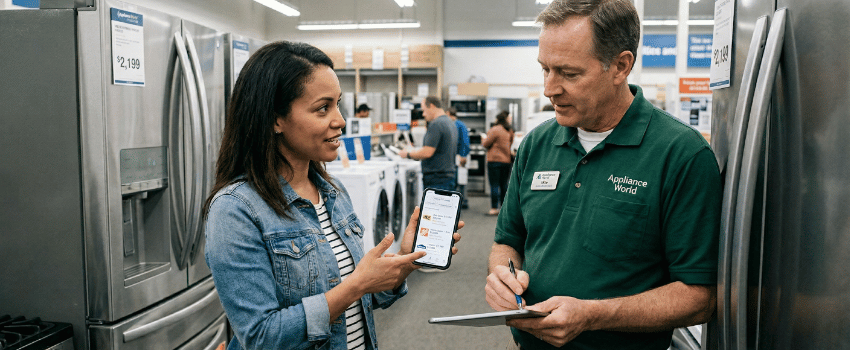
The fix is the Walmart app. Open it, tap Services, then “Check a Price,” and scan the barcode. The app shows the real current price. When that price is lower than the sticker, you found a hidden clearance item. Keep going. In a good run through any department’s back section, you might find ten or twelve of them.
Walmart clearance is not centralized. It’s spread through each department, across endcaps and the back of shelves. Yellow tags mean permanent markdown (clearance). Rollback signs mean a temporary price cut that will go back up. Keep those two apart and you won’t waste a trip chasing a rollback.
💡
Tip: Walmart clearance can reach 90-95% off at peak markdowns. The deepest cuts happen when a store resets a whole department for a new season’s products.
Costco, Best Buy, and Other Retailer Clearance Signals
Costco uses a simple code: any price ending in .97 is a clearance or dropped item. That’s not a sale. It’s Costco’s internal signal the item won’t come back. The site Costco97.com tracks user-submitted .97 finds, so you can check what’s on clearance before your visit.
Best Buy’s Outlet section is the online version of a clearance bin. Open-box, returned, and refurbished items carry big discounts. “Excellent” open-box items often work like new but cost 15-20% less.
Home Depot and Lowe’s cut prices on floor model appliances, often 15-30% off. Those items are also more open to price talks than regular shelf stock. At Kohl’s, yellow tags work the same as at Target. And Kohl’s Cash stacks on top of clearance, making end-of-season deals there go deep.
How to Find Hidden Clearance Using Store Apps
Most retailer apps have a clearance section or filter that doesn’t show up on the main website. The deals aren’t secret. Nobody built a clear path to them from the homepage.
The Walmart app lets you search “clearance” and filter by in-store pickup. That filter shows deals at your local store. Clearance pricing varies by location. What’s 75% off at one store might be full price at another. The pickup filter finds the local markdowns.
Target Circle is worth enabling for the same reason. App-only offers show up there that you won’t see in the weekly ad. These aren’t coupon codes. They’re account-level discounts, sometimes 10-30% off a single item. They refresh often. A 30-second check before a Target run can change the whole trip.
For Amazon, Warehouse Deals are the clearance layer. Open-box, returned, or refurbished items sold by Amazon at a discount. The condition grades (Like New, Very Good, Good, Acceptable) tell you what you’re buying. “Like New” items often just had a dinged outer box. Read the notes before skipping a listing.
Switching from delivery to in-store pickup on Walmart.com sometimes shows a lower price. In-store and online prices don’t always match. If something looks off, toggle the pickup option and check again.
Price Tracking Tools That Surface Unadvertised Deals
About 30% of online shoppers sign up for price tracking to get alerts when a price drops. That’s a start. The tools vary a lot in what they actually catch.
CamelCamelCamel shows the full price history for any Amazon product. Check it before you buy. Amazon’s “X% off” badges are sometimes applied to prices that were inflated first. The chart makes that clear right away.
Keepa does the same thing but also tracks Warehouse Deal prices. You can see when Amazon’s open-box pricing hits a real low. Flipp pulls weekly flyers from dozens of stores into one place. It’s the fastest way to see what’s on sale without visiting each site.
One tool most people skip: Milled.com keeps an archive of old store email newsletters going back years. Want to know when a store runs its big clearance? Pull up their past newsletters and look for the pattern. Most stores repeat the same sales on the same schedule. Once you’ve seen it, the timing is easy to predict.
Loyalty Programs and Member-Only Unadvertised Discounts
Loyalty programs are now the main channel for unadvertised deals at most big stores. GitNux data puts loyalty programs at 28% of total retail sales. Stores invest a lot in keeping those member prices hidden from non-members.
Target Circle is the clearest example. Offers in the app are account-specific. Two shoppers in the same Target aisle can have different active discounts on the same item. No coupon, no flyer. Just a quiet 10-20% off that goes away when it expires.
The same thing happens at grocery chains. At Safeway and Albertsons, the “Just for U” price only shows after you scan your app or type in your phone number. The shelf tag says full price. The register applies the lower price when you check in. People without an account pay more, and most of them don’t know it.
Amazon Prime works the same way. The member price shows when you’re logged in. Not signed in? You’re not seeing all the prices.
We track deals across thousands of stores, and one pattern keeps coming up. The gap between the member price and the regular price has grown a lot over the past few years. Stores use app-only deals to keep people loyal, not just to reward them. Not having the app costs real money now.
Stack Coupons on Top of Clearance for Maximum Savings
Clearance prices are not the floor. That’s what most deal guides miss. Promo codes and coupons can often stack on top of a sale price. When they work, the savings get big.
Here’s the workflow:
- Identify the clearance item and use the store app to confirm the real current price.
- Check for active store promo codes before you buy. Site-wide codes often apply to sale items too, unless the policy says no. DontPayFull has live codes for hundreds of retailers, including most chains where stacking works.
- Check whether a brand coupon applies. Coupons tied to a brand (not the store) usually work on clearance. The brand pays the store back no matter what the item sold for.
- Add a cashback layer. Many credit cards and cashback programs apply to clearance buys the same as any other purchase.
Stack all four and 70-90% off is within reach. One key thing to know: store percent-off codes usually apply to the sale price, not the original price. The math compounds. It doesn’t just add.
The rule: brand coupons almost always work on clearance. Store percent-off coupons vary. Target Circle stacks with clearance. Kohl’s Cash stacks with clearance. For anything else, a quick policy check before you pay is worth the time.
🤔
Did You Know: From processing millions of coupon codes, we’ve seen that site-wide percent-off codes from stores like Kohl’s and JCPenney work on clearance items at a much higher rate than codes with category exclusions in the fine print.
The Seasonal Clearance Calendar: Best Times to Shop Each Major Retailer
Post-holiday windows are the most reliable clearance opportunity all year. Stores need to move stock fast. The pattern is clear: 50% off the day after a holiday, 70% off a few days later, and 90% off within one to two weeks.
Here’s the calendar by month:
January: Toy sales at Walmart and Target run deep after the post-Christmas reset, with items hitting 70% off or more. Holiday decor goes to 70-90% off in the first two weeks. Winter clothing clearance also begins now.
February 15: Valentine’s Day clearance starts the day after the holiday. Candy, gifts, and seasonal items hit 50% off within days and keep dropping.
April (week after Easter): Easter items clear at 50-90% off. That includes candy, decor, and gifts that didn’t sell before the holiday.
June through July: Summer patio furniture, outdoor gear, and pool supplies start their clearance cycles as stores shift to back-to-school inventory. Target’s July toy reset is the second big toy window of the year.
Late August to early September: Back-to-school clearance kicks in once school starts. Stores clear out leftover supplies to make room for fall items.
October 30-31: Halloween clearance starts immediately as October ends. Costumes can hit 70% off within days.
December 18-26: Holiday clearance starts before Christmas at some retailers and runs through early January. The deepest cuts on decor and seasonal items usually arrive in the first week of the new year.
To sharpen your timing on a specific store, look up their past newsletters on Milled.com. Most chains repeat their big sales on roughly the same schedule each year. Two or three years of newsletters will tell you when a store marks down its big categories.
Social Media and Community Tools for Real-Time Clearance Finds
The fastest source of live clearance info isn’t a website. It’s other shoppers posting what they found and what price it scanned at.
Instagram hashtags like #walmartclearance and #targetclearance are basically crowd-sourced clearance reports in real time. Someone finds a toy at 90% off at a Walmart in Arizona, posts the scan price and tag photo, and every other shopper in that area knows what to look for. The posts are specific enough to actually use.
Facebook groups for store clearance go even further. Members post live finds with photos, prices, and exact store locations. If you’re planning a clearance run, those groups can tell you if it’s worth the trip before you leave.
Reddit groups like r/frugal and r/deals share sales and price errors that don’t appear anywhere else. Price errors can mean an item scans at a tiny fraction of the real cost, at least briefly before the store fixes it. Deal news sites add a layer of vetting, so you’re not chasing every random tip.
What NOT to Buy on Clearance (Avoid These Traps)
Clearance is a good deal for most items, but a few are worth skipping.
Televisions older than 2 years. Parts for old TV models get scarce fast. The warranty may already be done by the time a clearance TV hits a deep discount. Repair math won’t favor you.
Fridges with ice dispensers. The parts for ice dispensers are model-specific. Once a model is gone, a broken dispenser means a broken fridge. Floor models at Home Depot or Lowe’s are worth a look. Clearance models with complex parts are not.
Generic vitamins and supplements. Clearance on these often means a near-expiry date. Always check before you buy. Same rule applies to grocery clearance. A soup can at 90% off is a bad deal if it expired two months ago.
High-cost electronics with no return policy. Before buying a clearance laptop, TV, or appliance, check if the store’s return window covers clearance. Some stores mark it final sale. Knowing the policy up front changes how much risk you take on.
The Bottom Line
Finding hidden sales and clearance deals isn’t luck. It’s about knowing which price endings signal deep markdowns, using store apps to check the real price against an old shelf tag, and timing your visits around post-holiday windows when clearance runs 70-90% off. The biggest savings come when you layer a promo code or brand coupon on top of an already-reduced item. Stack the right mix and 70-90% off is a regular thing, not a lucky break.
Frequently Asked Questions
Can I use coupons on clearance items?
Yes, in most cases. Brand coupons almost always work on clearance because the brand pays back the store no matter what price the item sold at. Store percent-off coupons vary. Target Circle offers and Kohl’s Cash both stack with clearance. When in doubt, check the fine print for any exclusion language.
Are clearance items final sale or can they be returned?
It depends on the store. Some treat all clearance as final sale. Others apply the same return window to clearance as to regular items. Walmart and Target generally allow returns on clearance. Best Buy Outlet items have return windows listed in the product description. Always check before buying a big-ticket clearance item.
How do I know if a clearance price will drop further before I buy?
Check the price ending code. At Target, .68 or lower means 50%+ off and you’re close to final markdown. At Walmart, check how long the item has been on the yellow tag. If it’s been there more than two or three weeks, another price cut is more likely than a sellout.
What does a price ending in .97 mean at Costco?
A .97 price at Costco means the item is on clearance or being discontinued. Not a rollback. Costco won’t reorder it once it’s gone. The site Costco97.com keeps a photo log of current .97 items that shoppers have found and posted.
What is the best day to find new clearance at Target?
Target adds clearance by department each week. Monday is for electronics, accessories, and kids’ clothing. Thursday is best for housewares, shoes, and toys. Visit the day after your department’s markdown day to get first pick.
Does Walmart have an online clearance section?
Yes. Search “clearance” on Walmart.com to see current sale items. Filter by in-store pickup to find markdowns specific to your local store. Prices vary by location, so the filter is how you find the local deals.
What apps alert you to hidden clearance deals?
The Walmart app and Target Circle both show local and account-specific pricing that doesn’t appear on the main sites. For Amazon price history, CamelCamelCamel and Keepa track drops over time and send alerts. Flipp pulls weekly sales from many stores into one place.
Sources
- Amra & Elma – Clearance Marketing Statistics: Data on online searches for clearance and hidden deals, mobile shopping behavior (2026)
- Deloitte – Consumers Shift Spending: Survey data on consumer deal-seeking behavior (2025)
- InvespCRO – How Discounts Affect Online Consumer Buying Behavior: Statistics on deal-waiting behavior, promo code searching, and price tracking service adoption (2023)
- CouponCommando – Clearance Rack Secrets: Target clearance tag price ending codes and Walmart digital vs. physical pricing gaps (2026)
- GroceryCouponGuide – 8 Secrets for Finding Hidden Clearance at Target: Target weekly markdown schedule, toy aisle reset windows, and holiday clearance timing (2026)
- GitNux – Loyalty Programs Statistics: Loyalty program share of retail sales (2026)
Do You Have Any Suggestions?
We're always looking for ways to enrich our content on DontPayFull.com. If you have a valuable resource or other suggestion that could enhance our existing content, we would love to hear from you.
Was this content helpful to you?
Related Articles