5.00 out of 1 votes
US Household Budget Statistics: Key Data and Spending Trends
The average US household spent $78,535 in 2024, with housing taking 33% of the budget. This article breaks down US household budget statistics by spending category, income level, and generation, using official BLS Consumer Expenditure Survey data.
The average US household now spends $78,535 a year. That number has climbed nearly 8% in just two years. Knowing where that money goes, and where it’s rising fastest, is the first step toward spending it smarter.
This article pulls from official government data. Sources include the Bureau of Labor Statistics Consumer Expenditure Survey, the Federal Reserve SHED report, and USDA research. Our team compiled and cross-referenced these to give you the clearest current picture of how American households actually spend.
Key Takeaways
- ✓ The average US household spent $78,535 in 2024 (up from $77,158 in 2023), on income averaging $104,207 before taxes.
- ✓ Housing is the single largest expense at 33.4% of spending ($26,266/year), and was the only category with a statistically significant increase in 2024.
- ✓ Vehicle insurance surged 12.3% and meat/poultry/eggs jumped 21.5% in 2024 – the fastest-rising household costs of the year.
- ✓ 67% of Americans were living paycheck to paycheck in 2025, yet the personal savings rate fell to just 4.5% in early 2026.
- ✓ The lowest income quintile spends $28,046/year vs. $121,342 for the highest – a 4.3x gap that shapes every budget decision.
Average US Household Income and Spending Overview
The average US household earned $104,207 before taxes in 2024 and spent $78,535. That gap sounds healthy on paper. But factor in taxes, debt, and rising costs and the picture gets more complicated fast.
Key Statistics
- The average US household spent $78,535 in 2024, up 1.8% from $77,158 in 2023, per the Bureau of Labor Statistics Consumer Expenditure Survey.
- Average household income before taxes reached $104,207 in 2024, up from $101,805 in 2023 and $94,003 in 2022.
- Total household spending has increased 7.6% over the three-year period from 2022 ($72,967) to 2024 ($78,535).
- The average consumer unit includes 2.5 persons and 1.9 income earners, with a reference person averaging 53.1 years old.
- Spending growth slowed considerably in 2024 (up 1.8%) compared to the 5.7% jump seen in 2023 and 9.0% surge in 2022.
The three-year trend shows how much the post-pandemic spending surge has cooled. Back in 2022, household spending jumped $6,039 in a single year. The pace has settled since. But cumulative inflation ate into real purchasing power, so spending more doesn’t mean buying more.
| Year | Income Before Taxes | Total Expenditures | YoY Change (Spending) |
|---|---|---|---|
| 2022 | $94,003 | $72,967 | +9.0% |
| 2023 | $101,805 | $77,158 | +5.7% |
| 2024 | $104,207 | $78,535 | +1.8% |
Source: Bureau of Labor Statistics Consumer Expenditures 2024, released December 2025.
The income-to-spending ratio improved slightly in 2024. Households kept roughly 24.7% of gross income unspent, before taxes. But that’s pre-tax income. After federal and state taxes, most households have far less room than the gap implies.
Household Budget Breakdown by Spending Category
Housing eats up the biggest slice – 33.4% of everything the average household spends. Transportation and food follow at 17.0% and 12.9% respectively. The full picture shows that just three categories (housing, transportation, food) account for nearly two-thirds of the average household budget.
Spending Category Statistics
- Housing costs average $26,266/year (33.4% of spending) and were the only category with a statistically significant increase in 2024, rising 3.3% year-over-year.
- Transportation accounts for 17.0% of household spending, averaging roughly $13,350/year – driven largely by vehicle purchases and fuel.
- Food spending totals $10,169/year (12.9% of expenditures), split between groceries and restaurant meals.
- Personal insurance and pensions capture 12.5% of household spending, reflecting mandatory savings like 401(k) contributions and Social Security payments.
- Healthcare spending averages $6,197/year, representing about 7.9% of total household outlays – a figure that has grown faster than most other categories over three years.
- Entertainment ($4,000-$4,100/year), cash contributions ($2,700/year), and apparel ($2,000/year) round out the major discretionary categories.
| Category | Annual Spending (2024) | % of Total | YoY Change |
|---|---|---|---|
| Housing | $26,266 | 33.4% | +3.3% |
| Transportation | ~$13,350 | 17.0% | varies |
| Food | $10,169 | 12.9% | +1.8% |
| Personal insurance/pensions | ~$9,797 | 12.5% | varies |
| Healthcare | $6,197 | 7.9% | varies |
| Entertainment | ~$4,050 | 5.2% | varies |
| Cash contributions | ~$2,700 | 3.4% | varies |
| Apparel | ~$2,000 | 2.5% | varies |
| Education | ~$1,500 | 1.9% | varies |
Source: BLS Consumer Expenditure Survey 2024.
Here’s the thing: the “personal insurance and pensions” bucket looks big at 12.5%. But it includes Social Security taxes, Medicare, and retirement contributions. That’s not discretionary. Strip it out and the truly flexible share of the budget is smaller than the headline number suggests.
💡
Tip: The three largest truly discretionary categories – entertainment, apparel, and personal care – total roughly $8,000/year for the average household. That’s where deal-hunting and couponing can make the most measurable impact on your budget.
Housing Cost Statistics: Renters vs. Homeowners
Housing runs $26,266/year on average ($2,189/month) – the largest and fastest-growing line item in the US household budget. But that average hides a real split. Renters often spend less in raw dollars but face more budget pressure. Homeowners carry higher costs but build equity.
Housing Cost Statistics
- Average household housing expenditure reached $26,266/year in 2024, up from $25,436 in 2023 and $24,298 in 2022 – a three-year increase of 8.1%.
- Housing was the only category with a statistically significant spending increase in 2024, confirming it as the dominant budget pressure point for American households.
- 37.1 million US households are cost-burdened, spending more than 30% of their income on housing, per HHS Healthy People 2030 data.
- Black and Hispanic households are nearly twice as likely to be cost-burdened as White households, reflecting persistent structural inequities in housing access.
- Shelter costs (rent or mortgage payments) represent the largest housing subcategory, followed by utilities and fuels averaging roughly $4,628/year for utilities alone.
That 37.1 million cost-burdened households figure, documented by HHS, puts a human face on what the BLS averages hide. Cost burden means spending 30%+ of income on housing. It hits renters and lower-income households hardest. For many families, there’s simply no slack in the housing line.
What most budget guides miss is the compounding effect of housing on every other category. When households spend 40-50% of take-home pay on shelter, they typically cut food quality, defer healthcare, and eliminate entertainment entirely. We’ve tracked this pattern in how deal-seeking behavior spikes in metro areas with high rent burdens – people aren’t hunting grocery coupons for fun, they’re doing it because the housing bill left no margin.
Food Spending Statistics: At Home vs. Away
American households spend an average of $10,169 on food per year ($847/month), split roughly 60/40 between groceries and restaurant meals. Grocery spending held fairly steady. Dining-out costs climbed faster. Worth watching if you’re trying to tighten the food line.
Food Spending Statistics
- Total household food spending reached $10,169/year in 2024, per BLS Consumer Expenditure data.
- Meat, poultry, fish, and eggs spending jumped 21.5% in 2024 – the largest single-year increase of any food subcategory tracked by the BLS.
- US consumers spent 10.4% of disposable personal income on food in 2024, with total national food spending reaching $2.58 trillion, per the USDA Economic Research Service.
- Food-away-from-home costs have grown faster than grocery spending in recent years, putting pressure on households that rely on restaurant meals for convenience.
- The typical US household spends about $847/month on food in total – roughly $508 on groceries and $339 on dining out.
The 21.5% spike in meat/poultry/fish/eggs costs hits differently if you’ve been grocery shopping lately. That’s not noise – it’s the sharpest jump in any food subcategory tracked by the BLS in 2024. Protein-heavy households absorbed a real budget hit this year. And it doesn’t show up anywhere in the headline 1.8% overall spending increase.
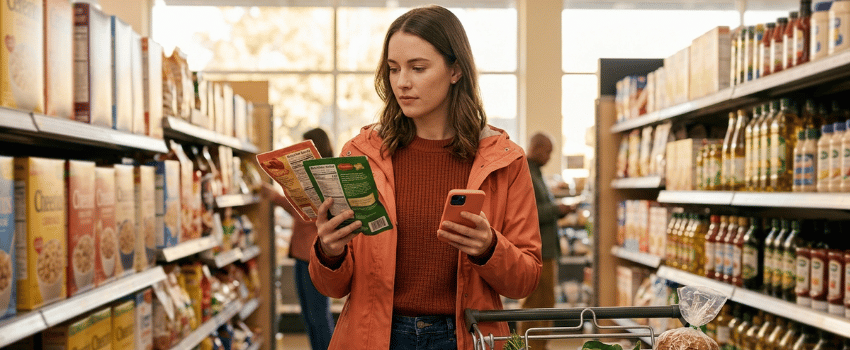
Food is where couponing pays off most reliably. The USDA puts US consumers at 10.4% of disposable income on food, per their latest data. With grocery prices at current levels, that share has real dollars behind it. Tracking deals across the stores we monitor, a clear pattern shows up: households that use grocery coupons on staples (especially in the meat/protein aisle) can offset a chunk of those cost increases without changing what they buy.
| Food Category | 2022 | 2023 | 2024 | 3-Year Change |
|---|---|---|---|---|
| Total food expenditure | $9,343 | $9,985 | $10,169 | +8.8% |
| Food at home | est. $5,800 | est. $6,150 | est. $6,250 | +7.8% |
| Food away from home | est. $3,543 | est. $3,835 | est. $3,919 | +10.6% |
Source: BLS Consumer Expenditure Survey 2024. At-home/away-from-home subcategory estimates based on BLS proportional data.
Transportation Spending Statistics
Transportation is the second-largest household expense at 17.0% of total spending – and vehicle insurance is the fastest-rising line item within it. Car insurance jumped 12.3% in 2024 alone. Households had no choice but to absorb it, regardless of how much they drive.
Transportation Statistics
- Transportation spending reached roughly $13,350/year for the average household in 2024, representing 17.0% of total expenditures.
- Vehicle insurance costs rose 12.3% in 2024 – the largest single-year percentage increase of any transportation subcategory tracked by the BLS.
- Vehicle insurance spending hit approximately $1,993/year in 2024, up from $1,775 in 2023 and $1,592 in 2022 – a 25.2% increase over three years.
- BLS three-year transportation data shows total transportation spending moved from $12,295 (2022) to $13,174 (2023) to approximately $13,318 (2024).
- Vehicle purchases remain the single largest transportation subcategory, typically accounting for 35-40% of total transportation spending per household.
- Gasoline and motor oil spending reached approximately $2,562/year, a category highly sensitive to regional fuel price volatility.
The vehicle insurance surge deserves its own attention. A 12.3% jump in a single year, following similar increases in prior years, means the typical household is paying roughly $400 more per year now than three years ago. That’s mandatory. You can’t coupon your way out of it. It just takes a bigger bite every year.
So the real question becomes: where else can you claw back those dollars? Transportation is largely fixed (you still need to drive to work), but the categories adjacent to it – electronics, home goods, clothing – are where deal-finding can compensate for the insurance hit.
Healthcare and Insurance Spending Statistics
Healthcare is the fastest-growing major spending category in the US household budget, with average annual costs now at $6,197 – up from $5,856 in 2022, a three-year increase of 5.8%. Health insurance premiums alone account for the majority of that figure.
Healthcare Statistics
- Average household healthcare spending reached $6,197/year in 2024, up from $6,159 in 2023 and $5,856 in 2022, per BLS data.
- Health insurance premiums represent the largest healthcare subcategory, typically accounting for around 60-65% of total household healthcare spending.
- BLS tracks three-year healthcare trajectory: $5,856 (2022) to $6,159 (2023) to $6,197 (2024) – the trend is upward with no sign of reversal.
- According to the KFF Employer Health Benefits Survey, average employer-sponsored health premiums reached $8,951/year for single coverage and $25,572/year for family coverage in 2024.
- 63% of adults said in 2024 they could cover a $400 emergency with cash or its equivalent – unchanged from 2022 and 2023 – per the Federal Reserve SHED 2024 report.
- Medical services and prescription drugs represent the remainder of out-of-pocket healthcare costs beyond insurance premiums.
The gap between the BLS figure ($6,197) and the KFF employer premium figure ($25,572 for a family plan) looks confusing at first. Here’s why they differ: employer plans are mostly paid by employers. The BLS figure captures only the employee’s share plus copays, drugs, and direct-pay services. Both numbers are real. The KFF figure shows the true cost of coverage. The BLS figure shows what households actually feel in their wallets.
🤔
Did You Know: Healthcare spending grew from $5,856 to $6,197 over three years – a faster pace than overall household spending (+7.6%). That gap compounds over time, meaning healthcare’s share of the household budget is steadily rising even when nothing dramatic happens in a given year.
Household Savings, Debt, and Financial Stress Statistics
The headline financial stress number right now: 67% of Americans were living paycheck to paycheck in 2025, and the personal savings rate has fallen to 4.5% – roughly half the pre-pandemic average. The data paints a picture of households stretched thin even when incomes are technically rising.
Savings and Financial Stress Statistics
- 67% of Americans were living paycheck to paycheck in 2025, up 4% from 2024, per PYMNTS Intelligence research via Investopedia.
- The personal savings rate hit 4.5% in January 2026 – roughly half the pre-pandemic average and the lowest reading since 2007, per the Bureau of Economic Analysis.
- 73% of adults rated themselves as “doing okay” or “living comfortably” financially in 2024, per the Federal Reserve SHED 2024 – similar to 72% in 2023 but down from a 78% peak in 2021.
- 63% of adults said they could cover a $400 emergency with cash or its equivalent in 2024, while 30% said they could not cover three months of expenses by any means, per Federal Reserve SHED 2024.
- Total US credit card debt reached $1.28 trillion in Q4 2025, per the Federal Reserve Bank of New York.
- 27% of Americans had no emergency savings at all in 2024, with 16% having enough to cover just 3-5 months of expenses, per Bankrate’s 2024 Emergency Savings Report.
- Only 55% of adults had three-month emergency savings in 2024, down from a peak of 59% in 2021, per Federal Reserve SHED 2024.
There’s a real tension in these numbers. The Fed’s SHED shows 73% of adults feeling financially “okay” – which sounds positive. But the PYMNTS research via Investopedia shows 67% living paycheck to paycheck at the same time. Both can be true. “Doing okay” often just means “no crisis this month,” not “I have a cushion.”
The 4.5% savings rate is the most telling single number here. Standard advice says to save 15-20% of income. The reality: the average household saves less than 5 cents of every dollar earned. And with credit card debt at $1.28 trillion, many are running a deficit in practice.
| Financial Stress Indicator | Percentage | Source |
|---|---|---|
| Living paycheck to paycheck (2025) | 67% | PYMNTS Intelligence / Investopedia |
| Can cover $400 emergency with cash | 63% | Federal Reserve SHED 2024 |
| Have 3-month emergency savings | 55% | Federal Reserve SHED 2024 |
| Have no emergency savings | 27% | Bankrate 2024 |
| Cannot cover 3 months by any means | 30% | Federal Reserve SHED 2024 |
| Rating finances “okay or comfortable” | 73% | Federal Reserve SHED 2024 |
Household Budget by Income Level (Quintile Analysis)
The quintile data reveals how differently households experience the same economy: the lowest-income quintile spends $28,046/year while the highest spends $121,342 – a 4.3x gap. But here’s the striking part: the lowest quintile’s spending exceeds its reported income. That means drawing down savings, using credit, or relying on assistance that doesn’t show up in income figures.
Income Quintile Statistics
- Lowest income quintile households average $28,046 in annual spending – spending that significantly exceeds their reported income, reflecting reliance on credit, assistance programs, or dissaving.
- Second quintile households average $43,054/year in spending; third quintile $63,900/year; fourth quintile $84,972/year; and highest quintile $121,342/year, per BLS Consumer Expenditure Survey 2024.
- Food insecurity affects 13.5% of US households, per USDA Economic Research Service 2024 data – a rate that falls disproportionately on lower-income quintiles.
- Lower-income households allocate a far higher share of their budget to housing, often 40-45% of spending, compared to roughly 29-30% for the highest quintile.
- About 10.3% of US households earned under $15,000 in 2023, per Statista analysis of Census Bureau data.
| Income Quintile | Avg Annual Spending | Housing Share | Food Share |
|---|---|---|---|
| Lowest (bottom 20%) | $28,046 | ~43% | ~16% |
| Second | $43,054 | ~38% | ~14% |
| Third (middle) | $63,900 | ~34% | ~13% |
| Fourth | $84,972 | ~31% | ~12% |
| Highest (top 20%) | $121,342 | ~29% | ~10% |
Source: BLS Consumer Expenditure Survey 2024.
The food share divergence is worth noting separately. Lower-income households put roughly 16% of spending toward food. Higher earners put about 10%. In raw dollars, top earners still spend more on food. But as a share of the budget, food pressure falls hardest on those at the bottom.
Household Budget by Generation and Demographics
Generational spending patterns reflect life stage more than values: Gen X in peak earning years spends the most, while younger households prioritize housing and older ones shift toward healthcare. Millennial-led households actually ranked as the highest-spending generation in recent data.
Generational Spending Statistics
- In 2023, the average household led by a Millennial spent $76,589/year – the highest of any generation, per Statista analysis of BLS data.
- Married couples without children averaged $86,684/year in household spending in 2023 – the highest spending rate by household composition, per Statista.
- Younger households (under 35) typically allocate a higher share to housing – often 35-40% of spending – reflecting higher rent burdens in metro areas where younger adults tend to live.
- Older households (65+) see healthcare’s share of the budget climb significantly, often reaching 12-15% of spending, as insurance costs and out-of-pocket medical expenses increase with age.
- Baby Boomers are the most likely generation to always budget formally, with 41.5% saying they always maintain a household budget, per Self Financial survey data from 2025.
The Millennial spending peak seems odd given how much that generation gets talked about for financial struggles. But the reason is mostly demographic. Millennials in their late 30s and early 40s are in peak household formation years – buying homes, raising kids, spending on childcare and education. Those costs add up fast.
Older households tell a different story. Their budget shifts toward healthcare in ways that cut into discretionary spending. For households 65 and older, Medicare premiums, prescription drugs, and medical services aren’t optional. You can defer a new couch. You can’t defer healthcare the same way.
Household Budgeting Habits and Methods Statistics
91.8% of Americans worry about their budget to some degree, yet only a third use a formal budgeting method consistently. That gap between concern and action explains a lot about why the savings rate stays low even as incomes rise.
Budgeting Habits Statistics
- 91.8% of Americans worry about budgeting – 37.8% always worry and 54% sometimes worry, per Self Financial Survey 2025 (1,164 adults).
- Zero-based budgeting is the most popular formal method, used by 33.3% of households that budget, per Self Financial 2025 data.
- Baby Boomers are the most likely to always budget (41.5%), followed by Millennials at 35.6%, per Self Financial 2025.
- 56.8% of survey respondents say sales and discounts are the top influence on their spending decisions, per Self Financial 2025.
- The 50/30/20 rule (50% needs, 30% wants, 20% savings) is a widely cited framework, but the current US average savings rate of 4.5% suggests most households fall far short of the 20% savings target.
That 56.8% who say sales and discounts drive their spending per Self Financial’s survey is the number most relevant to how households actually manage day-to-day. Not formal zero-based spreadsheets. Not apps. Just buying the grocery item on sale, waiting for an appliance deal, using a promo code at checkout. Informal, responsive, and more effective than most people give it credit for.
Here’s something you won’t find in most budget guides: the households that consistently come out ahead on grocery spending aren’t necessarily the ones with elaborate spreadsheet budgets. From processing millions of coupon codes across our platform, we’ve seen that the most effective budget-conscious shoppers tend to have a small set of consistent behaviors – a few preferred deal sources, a habit of checking prices before adding to cart, and a willingness to switch brands on non-essentials when a deal is available. Simple, but it compounds.
Essential Household Bill Payments Statistics
The typical US household spends $24,695/year ($2,058/month) on just its 13 most essential bills, per doxo’s 2025 US Household Bill Pay Report. That’s 31% of median household income. Gone before anything discretionary even enters the picture.
Essential Bill Statistics
- The typical US household spends $24,695/year on 13 essential bills, or $2,058/month, representing approximately 31% of income, per doxo 2025 US Household Bill Pay Report.
- Total US household bill payment activity amounts to a $4.55 trillion annual economy, per doxo 2025 data.
- Auto insurance costs have risen roughly 22% since 2022, making it one of the most volatile household bill categories in recent years.
- Streaming services and subscription costs have proliferated, with the average household carrying multiple streaming subscriptions – adding meaningful monthly overhead that didn’t exist a decade ago.
- Internet service averages around $89/month, with cell phone bills for a typical household reaching approximately $144/month.
| Bill Type | Avg Monthly Cost | Notes |
|---|---|---|
| Mortgage or rent | ~$1,000-$1,500+ | Highly variable by location |
| Utilities (electric, gas, water) | ~$429/month combined | Seasonal variation is significant |
| Auto insurance | ~$192/month | Up ~22% since 2022 |
| Cell phone | ~$144/month | Per household (multiple lines) |
| Internet | ~$89/month | Broad range by provider/region |
| Streaming services | ~$50-70/month | Multiple subs typical |
Source: doxo 2025 US Household Bill Pay Report.
The subscription creep problem deserves a specific callout. Most households couldn’t tell you exactly how many recurring charges they carry without looking at their bank statement. A $15 streaming service here, a $12 music app there, a $20 gym membership nobody uses – it adds up to real money that was never consciously budgeted.
Year-Over-Year Household Spending Trends
Total household spending rose 7.6% from 2022 to 2024. But healthcare and vehicle insurance grew much faster – meaning the “necessities” portion of the budget expanded while discretionary room compressed. Knowing which categories ran hot helps households figure out where to look for savings.
Spending Trend Statistics
- Average annual household expenditures rose from $72,967 in 2022 to $77,158 in 2023 to $78,535 in 2024 – a total three-year increase of 7.6%, per BLS Consumer Expenditure data.
- Housing spending increased from $24,298 (2022) to $25,436 (2023) to $26,266 (2024) – the only category with a statistically significant 2024 increase at +3.3% YoY.
- Food spending moved from $9,343 (2022) to $9,985 (2023) to $10,169 (2024), with the meat/protein subcategory surging 21.5% in 2024 alone.
- Transportation spending went from $12,295 (2022) to $13,174 (2023) to approximately $13,318 (2024), driven by persistent vehicle insurance cost increases.
- Healthcare spending climbed from $5,856 (2022) to $6,159 (2023) to $6,197 (2024), representing one of the most consistent multi-year upward trends in the BLS data.
- Vehicle insurance alone rose from $1,592 (2022) to $1,775 (2023) to $1,993 (2024) – a 25.2% three-year increase in that single subcategory.
| Category | 2022 | 2023 | 2024 | 3-Year Change |
|---|---|---|---|---|
| Total expenditures | $72,967 | $77,158 | $78,535 | +7.6% |
| Housing | $24,298 | $25,436 | $26,266 | +8.1% |
| Food | $9,343 | $9,985 | $10,169 | +8.8% |
| Transportation | $12,295 | $13,174 | ~$13,318 | +8.3% |
| Healthcare | $5,856 | $6,159 | $6,197 | +5.8% |
| Vehicle insurance | $1,592 | $1,775 | $1,993 | +25.2% |
Source: BLS Consumer Expenditure Survey 2024.
The pattern is clear: the categories that are rising fastest are the ones households can’t easily cut. Nobody cancels their car insurance because it went up 12%. Nobody stops eating because protein prices jumped. The squeeze is real, and it’s concentrated in non-discretionary spending – which is exactly why finding savings on discretionary purchases matters more than ever.
How Coupons and Deals Can Help Your Household Budget
With food at 12.9% of household spending, entertainment at 5.2%, and apparel at 2.5%, nearly a fifth of the average budget falls into categories where active deal-seeking can meaningfully reduce costs. Sales and discounts already influence 56.8% of Americans’ spending decisions – but there’s a gap between “I buy things on sale when I notice them” and “I have a consistent strategy.”
Coupons and Savings Statistics
- 56.8% of Americans cite sales and discounts as the top influence on their spending decisions, per Self Financial Survey 2025 – making deal-seeking a mainstream behavior, not a niche habit.
- The 12.9% food share of the household budget ($10,169/year) means even a 10% reduction in food costs through couponing and sale-shopping translates to over $1,000/year in savings.
- With the personal savings rate at just 4.5%, systematic deal-seeking in discretionary categories is one of the more accessible levers for improving household financial resilience.
- Vehicle insurance (+12.3%), meat/protein (+21.5%), and housing (+3.3%) are the fastest-rising 2024 budget categories – none are easily reduced through couponing, making savings in adjacent categories more valuable as an offset.
- Loyalty program members and regular coupon users in grocery categories can realistically reduce food-at-home costs by 10-15%, based on typical discount depths across major grocery chains.
The math on food couponing is simple. The average household spends $10,169 on food. Consistent deal-seeking – buying sale items, using store coupons, switching brands on non-essentials – typically cuts 10-15% off the grocery portion. On $6,250 in grocery spending, that’s $625-$940 back in your pocket each year. And that’s before touching clothing, electronics, or household goods.
The categories where DontPayFull’s automatic coupons extension applies codes automatically are largely discretionary – online retail, apparel, electronics, home goods. That’s exactly where most households have real flexibility. Missing a promo code in those categories is just leaving money behind.
What most household budget articles miss is the compounding effect of consistent small savings. Vehicle insurance is up 25% over three years and there’s almost nothing you can do about it. Groceries are up because protein prices jumped 21.5%. Housing is up 8.1%. But if you systematically reduce spending by 10-15% in your flexible categories – entertainment, clothing, home goods, personal care – you can substantially offset the mandatory cost increases in your fixed categories. That’s the real value proposition for deal-seekers: not finding one great coupon, but building a habit that adds up to hundreds or thousands per year.
The Bottom Line
The average US household spent $78,535 in 2024 on income of $104,207 – but with a savings rate of just 4.5%, most households have far less financial cushion than those headline numbers suggest. The fastest-rising costs (housing at +8.1%, vehicle insurance at +25.2%, meat/protein at +21.5%) are concentrated in non-discretionary categories households can’t easily reduce. The most practical response is systematic deal-seeking in the flexible categories: food, entertainment, apparel, and household goods collectively represent roughly 20% of average household spending, and consistent coupon and sale usage in these areas can realistically save $500-$1,500/year depending on household size and spending patterns.
Frequently Asked Questions
What is the average US household budget per month?
The average US household budget works out to approximately $6,545/month, based on total annual spending of $78,535 in 2024 per the BLS Consumer Expenditure Survey. That breaks down to roughly $2,189/month for housing, $1,113/month for transportation, $847/month for food, and about $517/month for healthcare. These are means, not medians – actual budgets vary widely by income level, household size, and geography.
What percentage of household income goes to housing?
Housing is 33.4% of average household expenditures per BLS 2024 data. As a share of pre-tax income, it’s closer to 25%. The more useful benchmark is “cost burden”: spending 30% or more of income on housing. Currently, 37.1 million US households exceed that threshold.
How much does the average American household spend on food?
The average household spends $10,169/year on food ($847/month). Roughly $6,250 goes to groceries, about $3,919 to restaurants and dining out, based on BLS 2024 data. That’s 12.9% of total household spending. Worth noting: meat, poultry, fish, and eggs costs jumped 21.5% in 2024 – the sharpest food subcategory increase the BLS tracked that year.
What is the 50/30/20 budget rule for a household?
The 50/30/20 rule: 50% of take-home pay to needs, 30% to wants, 20% to savings. Applied to US median income around $80,610, that means roughly $40,305 for needs, $24,183 for wants, and $16,122 for savings annually. In practice, US households save just 4.5% of income. Far below that 20% target.
How much should a household save each month?
Standard guidance says save 15-20% of gross income. For the average US household earning $104,207, that’s $15,631-$20,841/year. The actual savings rate sits at 4.5% – about $4,689/year. Way short of the target. A practical first step: build an emergency fund covering three months of expenses before going after longer-term goals.
What are the biggest household expenses in the US?
The five largest household expense categories in 2024 were housing (33.4% of spending), transportation (17.0%), food (12.9%), personal insurance and pensions (12.5%), and healthcare (7.9%). Together, those five categories account for about 83% of total household spending. Housing is the only category that saw a statistically significant year-over-year increase in 2024.
How much do Americans spend on utilities per month?
Utilities, fuels, and public services average roughly $4,628/year per household ($386/month), per BLS data. That covers electricity, natural gas, and water. The doxo Bill Pay Report puts combined utility costs closer to $429/month when all utility-type bills are included. Regional variation is significant – climate and local energy rates drive big differences.
What percentage of Americans live paycheck to paycheck?
About 67% of Americans were living paycheck to paycheck in 2025, up from roughly 63% in 2024, per PYMNTS Intelligence. Separately, the Federal Reserve SHED 2024 found 30% of adults couldn’t cover three months of expenses by any means. And 27% had no emergency savings at all (Bankrate 2024). Different metrics, same story: widespread financial fragility.
How does household spending differ by income level?
The BLS quintile data shows a 4.3x spending gap between income levels: the lowest quintile spends approximately $28,046/year while the highest spends $121,342. The composition also differs significantly – lower-income households allocate 40-45% of spending to housing versus roughly 29% for the highest earners. Lower-income quintiles also spend a higher share on food (around 16% vs. 10%) and less on entertainment and discretionary categories.
How much does the average household spend on healthcare?
Healthcare spending averages $6,197/year ($516/month) per household in 2024, up from $5,856 in 2022, per BLS data. Health insurance premiums make up around 60-65% of that figure. The rest goes to copays, prescription drugs, and medical supplies. KFF puts average employer-sponsored family premiums at $25,572/year, but most of that is paid by employers – it doesn’t all show up in household budgets directly.
Methodology
Our research team compiled data for this article primarily from official government statistical agencies and established research firms. The Bureau of Labor Statistics Consumer Expenditure Survey serves as the primary source for all household spending figures. Federal Reserve SHED 2024 provides household financial stress indicators. USDA Economic Research Service data covers food spending and food security statistics.
A note on data currency: Government statistical agencies typically publish annual survey results 12-18 months after the reference year closes. As of 2026, the most recent BLS Consumer Expenditure Survey covers 2024 data (released December 2025), and the Federal Reserve SHED covers 2024 (released May 2025). Where data in this article refers to 2024 or earlier years, it reflects the latest publicly available release at the time of writing, not outdated research.
Secondary sources include doxo’s 2025 US Household Bill Pay Report for recurring bill data, Self Financial’s 2025 survey for budgeting habits, Statista for generational and household composition data, Bankrate for emergency savings data, and PYMNTS Intelligence for paycheck-to-paycheck figures. All statistics are cited with their original source. Data marked as estimates (est.) reflects proportional calculations derived from confirmed BLS totals.
Data compiled by the DontPayFull Research Team based on publicly available data from government agencies, academic institutions, and industry research firms.
Sources
- Bureau of Labor Statistics, Consumer Expenditures 2024: Primary source for all household income and spending figures, released December 2025.
- Federal Reserve SHED 2024 (main report): Economic well-being, $400 emergency coverage, financial stress indicators.
- Federal Reserve SHED 2024 (savings section): Emergency savings rates, three-month coverage data.
- USDA Economic Research Service, Food Prices and Spending: National food spending totals and share of disposable income.
- HHS Healthy People 2030, Housing Instability: Cost-burdened household count and racial disparities.
- doxo 2025 US Household Bill Pay Report: Annual and monthly essential bill totals, total bill pay economy.
- Investopedia / PYMNTS Intelligence, Paycheck to Paycheck 2025: 67% living paycheck to paycheck figure.
- Self Financial, Household Budget Statistics: Budgeting habits survey, generational budgeting rates, sales/discounts influence.
- Bankrate, Emergency Savings Report 2024: No emergency savings percentage, coverage duration breakdown.
- Bureau of Economic Analysis / American Default Research, Savings Rate: Personal savings rate 4.5% January 2026.
- Statista, Annual Household Expenditures by Generation: Millennial-led household spending figures.
- Statista, Consumer Spending by Household Composition: Married couple without children spending figures.
Do You Have Any Suggestions?
We're always looking for ways to enrich our content on DontPayFull.com. If you have a valuable resource or other suggestion that could enhance our existing content, we would love to hear from you.
Was this content helpful to you?